
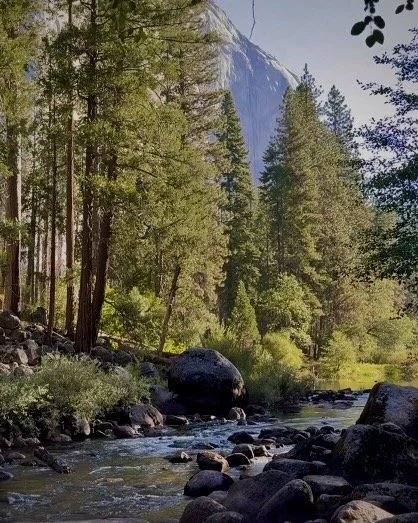
Giant sequoias, thousands of years old, dot acres of rich granite, majestic meadows, massive waterfalls, iconic rock climbing, and vast wilderness home to black bears, mule deer, coyotes, marmots, high-country birds in the meadows, and bobcats and mountain lions near the lakes. The annual February firefall phenomenon at Horsetail Fall, with its lava-like cascade, dazzles visitors who come to the valley of falling water.
Yosemite National Park, nestled in California’s Sierra Nevada mountains, is home to North America's highest waterfall, Yosemite Falls, and is the ancestral home of the Miwuk, Paiute, Mono, and Me-Wuk people. The Indigenous people of the land have a history that goes back thousands of years, to when Ice Age glaciers receded and created an environment for plants, animals, and people to survive. The First People were forcibly removed at the start of California’s Gold Rush, and what remained was eventually preserved and shared with the public for decades.
I visited the popular National Park with a friend midweek during the offseason to avoid the crowds and reduce traffic and stress on park employees. We camped in Hodgdon Meadow Campground 25 miles northwest of Yosemite Valley. It’s a quieter spot in the park located right inside the Big Oak Flat Entrance. We spent most of our time sightseeing in the valley, taking advantage of the park’s shuttle service and hiking the clearly marked, well-maintained trails. Most of the spots that held water were long dry, leaving nothing but sand. Still, the park was decorated with giant evergreen trees and towering mountains, offering some of the most beautiful and dramatic views. However, the beauty found in the park doesn’t mask the destruction of culture and history waiting in the background.
I felt lucky to experience the beautiful land while it’s still here, but knowing our public lands are under threat of destruction made the trip bittersweet. Today, Yosemite National Park faces a direct threat from a proposed federal land swap for a private development road, alongside severe staffing shortages and heavy overcrowding. The National Park Service has lost nearly a quarter of its permanent workers since early 2025. Park biologists and scientists are pulled from their research to clean restrooms, empty trash, and direct traffic as fewer rangers are available for visitor safety, trail maintenance, and resource protection. Climate change is increasing wildfire intensity, threatening giant sequoias and local wildlife habitats. Many are fighting to preserve the park today, but more voices must be included to make an impact.
About 45 million acres of national forest lands are at risk of being carved up and exploited around the country. The current administration hoped to push this through quietly, but informed citizens are pushing back to help keep these intact areas within our national forests protected. You can also make your voice heard by sending a message to the Chief of the U.S. Forest Service and the U.S. Secretary of Agriculture to help prevent the repeal of the Roadless Rule, a 2001 federal policy that protects undeveloped national forest lands by limiting new road building and timber cutting, here. You can also contact Congress here.