

I had started out with 12 students and ended up with eight. A series of unfortunate events involving medical evacuations turned our five-day backpacking trip into a one-night backcountry stay and four nights of base camping in Sequoia and Kings Canyon National Parks.
We were on the western slope of the Sierra Nevada in Sequoia National Park. This side is filled with majestic river canyons. We hiked through densely forested areas with massive trees, including giant Sequoias, Ponderosa Pines, and White Firs, and we camped in lush green meadows. Because of the trees, this side was shadier and more forgiving in the summer heat. However, the coolness from the trees wasn’t enough to keep the trip from dissolving in the sun.
I had never had a student in my five years in outdoor education have to be pulled off a trip before, and this last trip to the High Sierra Mountains was the first time I had to make the call to restructure the trip enough and go with the flow as things changed. Behavioral issues, illness, and misfortune filled this trip with enough surprises that I craved boredom. Some of the students were there because it was required of them. Others have parents who are outdoorsy, so they go along on trips like these whether they really want to or not. They know they're being given a special opportunity to be out in these outdoor spaces, where not everyone gets a chance. This trip with the more affluent group on the Western side of the Sierras was a far different trip than the first trip to the Eastern side of the High Sierra I did this year with students.
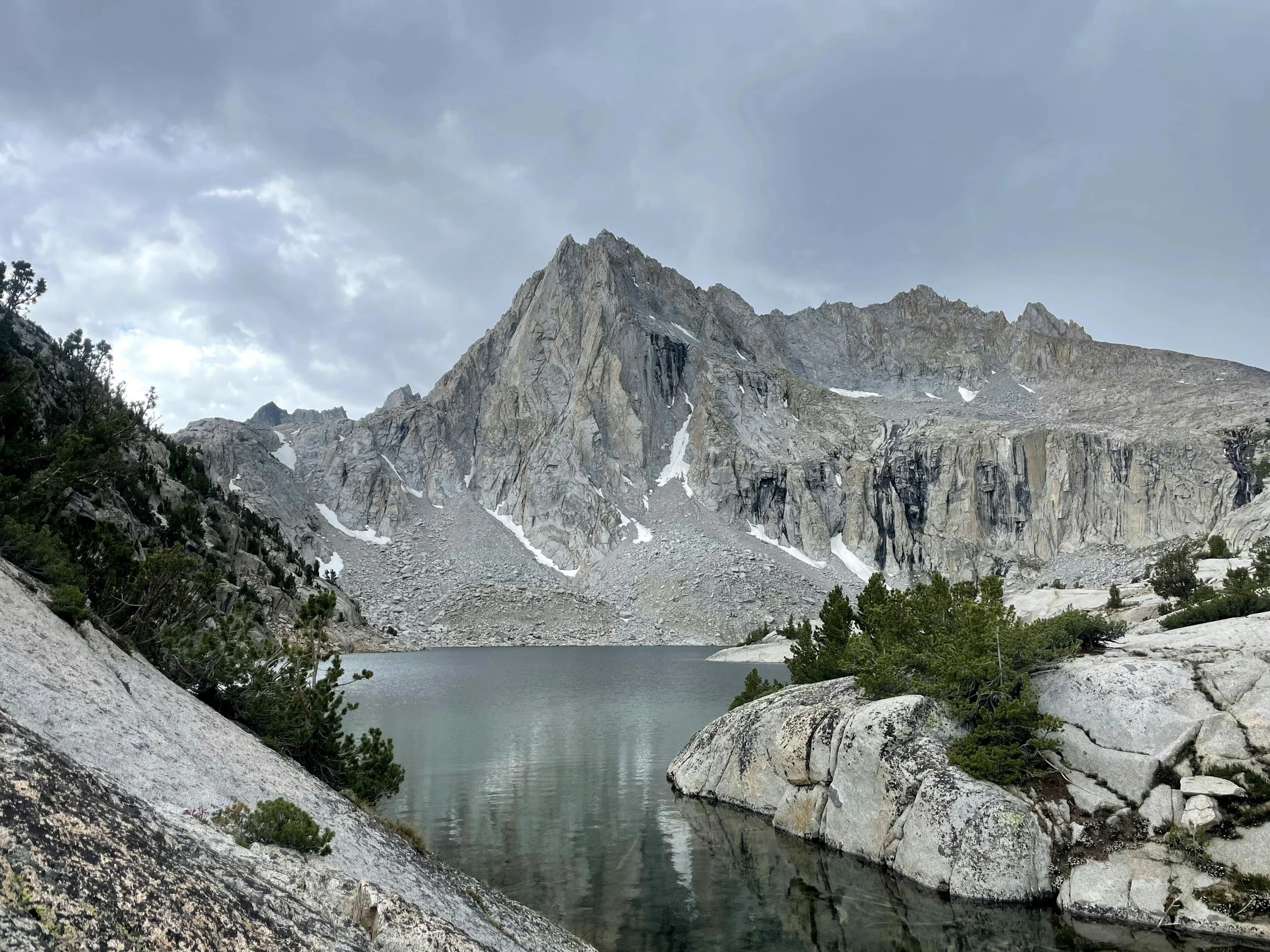
The first trip of the summer with students to the High Sierra was a nine-day trip which started out with a three-day acclimatizing base camp at Golden Trout Wilderness School before our six-day backcountry camping. We were on the eastern slope along the Inyo National Forest. The side that drops off sharply and dramatically from the high granite crest of the Sierra down to the high-desert Owens Valley. This side is more arid and sparse, decorated with Pinyon Pine, Juniper, Sagebrush Flats, and high-elevation trees like those found in the Ancient Bristlecone Pine Forest. The eastern slope of the Sierra is rugged, dramatic, alpine, and open. It is the gateway to massive peaks like Mount Whitney viewed from the east.
The weather was perfect aside from the unshaded sections of the trail mid-day, and all the students kept up with a steady hiking pace that led us to every planned destination. We followed the original plan, hiked up New Army Pass, swam in all the alpine lakes, and had a great time on the Eastern side of the mountain range. The students were resilient, knew that backpacking was hard, but were grateful to be outside in such a beautiful place. Although at one point I had to run back to Golden Trout Camp to grab extra propane, and students had enough bandages for blisters on their feet to cover 12 miles of paved road, everything went pretty smoothly. At least that is how I am seeing the trip now after the second trip went drastically differently than planned.
I got the chance to lead two different groups of students from different programs on opposite sides of the High Sierra Mountains. Two trips this summer to the High Sierra run by two completely different programs turned out so differently. I saw how different each section of the mountains was from the other within a couple of weeks. Two opposite-appearing ends with similar ties. The same dirt, rains, and rows of mountains bring each side together. I also saw the difference between the two groups of students. Working with a nonprofit that prioritizes getting more minorities, underserved, and underrecognized groups into the outdoors and then turning around to help out with other well-funded for-profit outdoor programs was eye-opening. The two groups of students came from wildly different backgrounds, and both trips ended up in wildly different ways. Many of the students encountered the same problems and were interested in the same history, science, and outdoor recreation information. However, each group tackled those same problems differently and wound up with different outcomes. The underserved community reveled in the chance to go on a backpacking trip outdoors, while the other group was out there only because they were asked to be.