

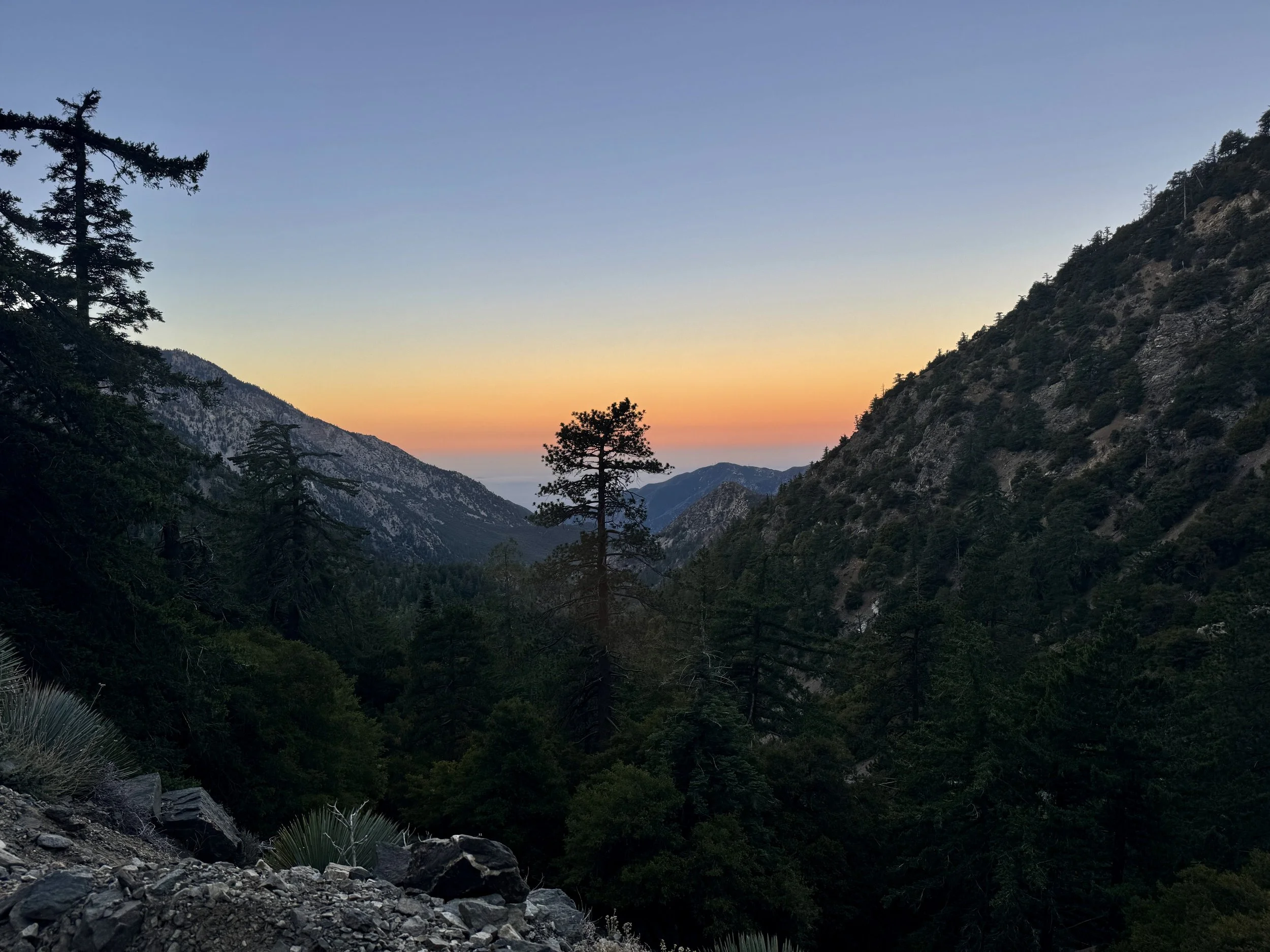
Every year, I talk about the dangers of hiking to the summit of Mount Baldy, the highest peak in the San Gabriel Mountains and Los Angeles County. I often run into people who think the mountain is just a casual day hike they can do without any training. However, in recent years, I have heard more news stories about people succumbing to Baldy’s extreme altitude changes, harsh winter microclimates, and icy drop-offs. The increasing number of wilderness rescues and tragic deaths has boosted the mountain’s reputation as one of the most dangerous peaks in the country.
People fail to comprehend that the journey doesn’t end when you reach the top of the mountain. Statistically, the vast majority of mountaineering accidents and fatalities do not happen at the summit itself, but rather during the descent. Research indicates that nearly 70% to 80% of all climbing accidents occur on the way down rather than on the way up. The phrase “The Summit Effect” refers to the psychological phenomenon in high-altitude mountaineering in which climbers let their guard down after reaching the peak, leading to a false sense of safety that causes the vast majority of descent accidents.
I had a brush with that false sense of safety and security while running back down Mount Baldy. I had beaten my personal record on the ascent and was riding high on the way down, but it didn’t last long. I took a tumble not too far away from the summit as the steep trail back down the Baldy Bowl route dropped further in elevation. I had lain there on the path, stunned on the ground for a bit, obviously not expecting to fall on the so-called “easy part.” I was fortunate enough only to scrape my knee and stain a small section of my leggings with blood, but I was alright physically otherwise. As I rose to my feet, all I could think was that the universe was trying to humble me and that nature needed to remind me who was in charge.
Humans have built cities and developed advanced technologies, but we remain profoundly vulnerable to natural forces such as severe weather, geological events, and ecological shifts that we call natural disasters. However, these are only disasters for those not in control. Nature is the boss at the end of the day, and this idea that nature is ultimately in control is a humbling reality. You can plan all you want, but if a terrible storm pops up near the summit of Baldy and it’s too dangerous to keep moving forward, it’s wise that you turn around and climb the mountain on another day.
It was good to be reminded that I can be pretty well-prepared for the outdoors, but that I’m not fully in control. I have the power and the choice to change my life as much as I want to, but some things are just out of my hands. It doesn’t mean that I can’t plan and prepare for the future, but that I should be open, flexible, and willing to move with the ebbs and flows so common in life in order to keep moving forward.
I filmed a little of my time on the mountain that you can watch here.