

Rising above the trees, aiming to reach the heavens, sit the Earth gods, who tower over its animals and people. They show grace and strength as their rocky exterior faces nearby towns, rivers, deserts, and oceans. Mountains are a prominent feature of nature. They help orient us in the wilderness and play a role in the larger ecosystem. However, they often carry a spiritual force in their wake.
Across global cultures and millennia, mountains have been revered as sacred spaces. They are universally viewed as thresholds where the divine and earthly intersect. They serve as cosmic centers, abodes of the gods, and ultimate destinations for spiritual pilgrimage.
Mount Kailash in Tibet is sacred to Hindus and Buddhists, and Mount Olympus in Greece is sacred to the Greeks. Mountains are frequently the locations where prophets and mystics receive divine instruction, like Moses did when he received the Ten Commandments on Mount Sinai. Mountains serve as the central pillar of the world, connecting the heavens, the earth, and the underworld. Oftentimes, ascending a mountain symbolizes a spiritual quest, a difficult yet rewarding journey toward enlightenment or union with the divine.
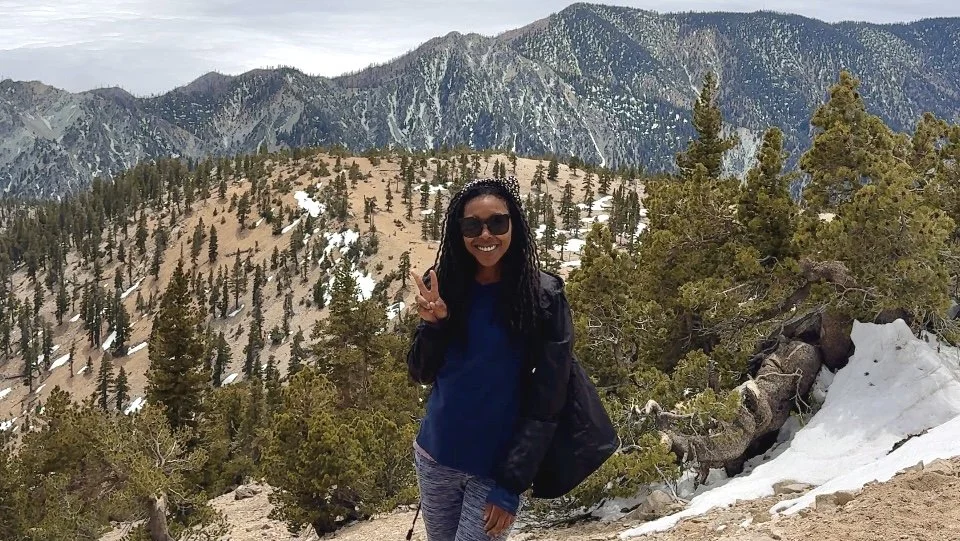
One mountain I enjoy climbing is San Gorgonio. The Cahuilla called it Kwiria-Kaich, meaning "bald" or "smooth.” The Luiseño called it Pewipwi, and considered it sacred, the older brother of Mount San Jacinto, and the Gabrielino (Tongva) called it Akvangna. The Serrano and Morongo peoples also see it as a sacred space, while the mountain reminds others of the demon, Tahquitz.
According to the Agua Caliente legend, Tahquitz was the first shaman created by Mukat, the creator of all things. Tahquitz became the guardian spirit of all shamans, and he gave them power to do good. But over time, Tahquitz began to use his power for selfish reasons. Some accounts report that Tahquitz, who resides on San Jacinto Mountain, steals people and/or their souls and devours them on the mountain. Tahquitz manifests himself in the form of fireballs, lightning, meteors, and thunderous sounds on the mountain and in the canyons.
San Gorgonio Mountain, also known locally as Mount San Gorgonio or Old Greyback, is the highest peak in Southern California and the Transverse Ranges, at 11,503 feet. It is in the San Bernardino Mountains, 27 miles east of the city of San Bernardino and 12 miles north-northeast of San Gorgonio Pass. The mountains were formed about 11 million years ago by tectonic activity along the San Andreas Fault and are still rising. For over 10,000 years, the San Bernardino Mountains and their surroundings have been inhabited by indigenous peoples, who used the mountains as a summer hunting ground.
The mountain lies within the San Gorgonio Wilderness, near Big Bear, as part of the San Bernardino Mountains' Sand to Snow National Monument. Mount San Gorgonio holds the record for the longest recorded line of sight in the contiguous United States. It is the only mountain in Southern California with a summit that is significantly above the tree line. On a clear day, it is plainly visible from the summit of Mount Whitney, 190 miles (306 km) away.
The 17-mile hike along the South Fork Trail is often a tough physical challenge for hikers looking for adventure. It’s a beautiful place for blood, sweat, and tears. For me, San Gorgonio Mountain is a healing place. It’s an area where I can venture out to and seek answers to questions I pose in the wilderness. Hiking here is always a long, reflective journey for me. The hours of ascending into the sky and back down to the parking lot give me time to think about life. Perhaps that is a glimpse of the sacred energy that lingers across this land.
I made a short vlog about my hike to San Gorgonio Peak. You can watch it here.