
My first ever backpacking trip happened in the summer of 2014. I had borrowed all my gear from friends in the college group I was in, including an old-school metal-framed pack, and brought dehydrated mashed potatoes, instant rice, and ready-to-heat-and-eat curry (all my favorite foods). I had just had my wisdom teeth removed a few days earlier, so I would have been eating those foods anyway. I learned how to start a fire without a lighter, and I slept out under a tarp on the ground. I remembered thinking that I would have never tried to do this on my own if it weren’t for the adventuring outdoor group. Knowing what to bring, how to prepare, and what to expect came with the luxury of having very outdoorsy friends.
I now find myself, about 12 years later, still backpacking and traveling with friends, but also leading students from middle school through high school, as well as adults of all ages, on instructional backpacking trips. I’ve earned certifications in outdoor education and leadership, taken courses with other trained professionals to develop various outdoor-related skills, and practiced these skills solo in the outdoors. I’ve made my own mistakes and learned from them, and I often tell my story to others so that they can avoid the same mistakes that I made.
What You Need to Know
What I have learned while backpacking, day hiking, rock climbing, kayaking, paddleboarding, and reading about the mistakes that other outdoorsy people have made over the past 12 years are the essentials and recommendations for staying safe and having a successful backpacking trip. It's recommended before your first backpacking trip to prioritize physical training, to familiarize yourself with your gear, and plan for safety. You’re encouraged to break in your hiking boots, pack light (or under 20% of your body weight), master water filtration (I have this one for groups) or treatment (and to know your water sources), and carry the "10 Essentials," which include navigation (with a backup map and compass), shelter, water filter, headlamp, and a first aid kit. Researching whether you need certain permits, knowing the weather forecast, and preparing for it to change in an instant at high altitude are also key steps to backpacking.
Trip and Gear Prep
Having a trip plan, an emergency plan, and letting someone else know about it, practicing the 7 Leave No Trace principles, including packing out all trash and handling human waste properly, and keeping food in bear-resistant containers or using a bear hang, especially in popular, forested areas, is a must. Investing in a comfortable, properly fitted backpack, a lightweight shelter, and a properly rated sleeping bag/pad is ideal. If you don’t have all the tools, you can rent from local gear shops, borrow them from outdoorsy friends, buy them used from places like Facebook Marketplace, local used gear shops, eBay, or Gear Trade, or buy them on sale or at discounted retailers.
Choosing a short, low-elevation, well-marked trail for your first trip and learning the route to build confidence are also recommended. It should be only 1 or 2 nights, with a plan to hike 5-7 miles a day, on a trail with less than 500-1,000 feet of elevation gain per day. You also want to choose campsites near a lake or stream for your first time. Typically, mid-July to late-September is ideal for planning a backpacking trip to the mountains. Too early in the summer or late in the fall, you may encounter snow, which poses challenges that you probably won’t be ready for as a beginner backpacker. Bugs are also typically worse early in the summer.
However, for a beginner, the most important thing is to manage expectations and ensure your safety by having the right tools and knowledge before you go. Day hiking and backpacking are two entirely different animals. Just because you can easily hike 12 or 15 miles with a day pack on doesn’t mean you can do the same with a 35 to 40-lb backpack on the trail. You learn something about the trail, your gear setup, or how you like to backpack with every trip you take. I’m always fine-tuning my gear and practicing technique every time I hit the trail.
Packing My Bag
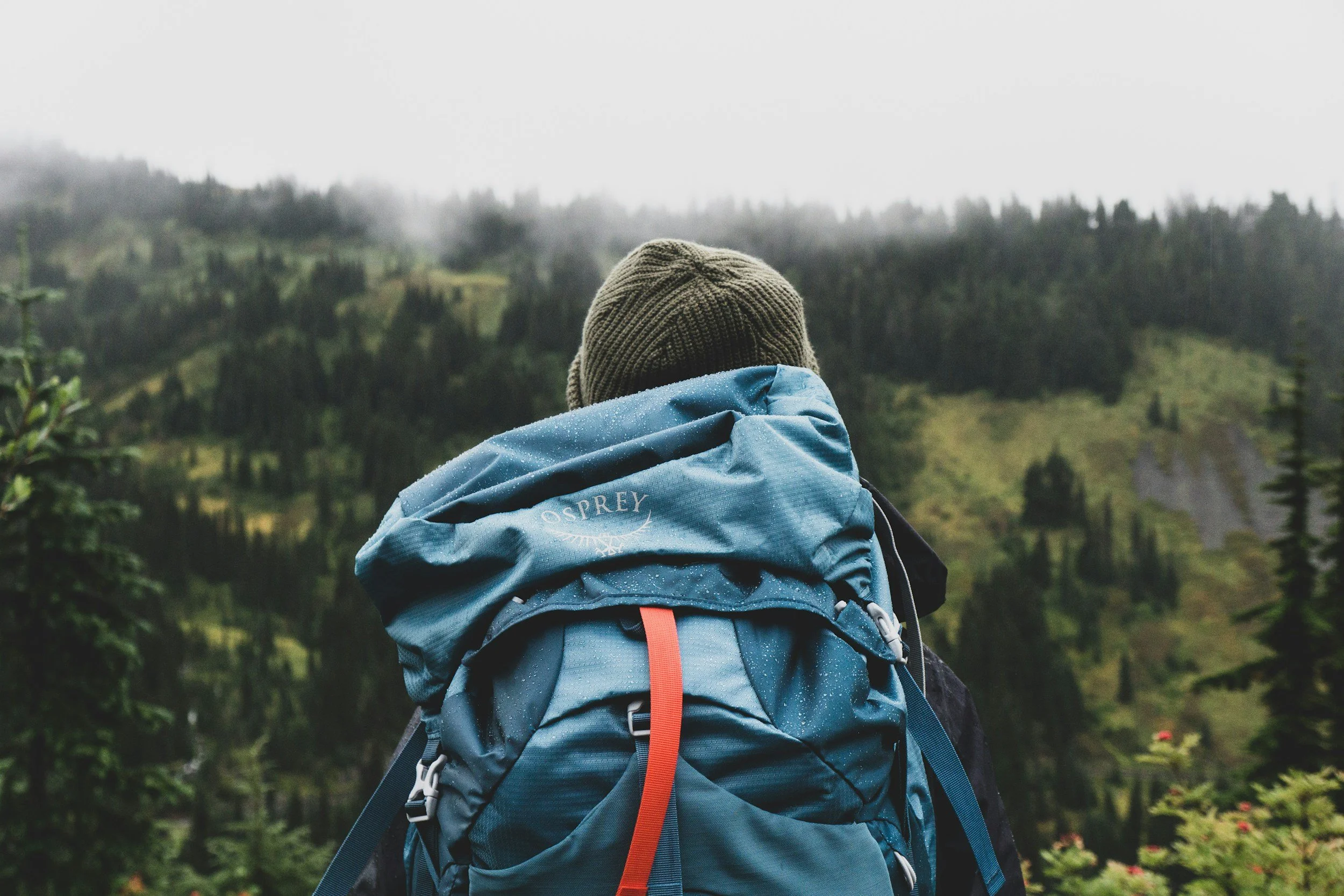
When I’m loading my pack (this is mine), I loosen all of the compression straps on the backpack, put my sleeping bag in first, fill the space around my sleeping bag with clothes you don’t need for the day, then I put in my bear canister or food, since this is typically the heaviest thing, and you want that weight centered on your back. I then stuff clothes and loose items around my food to keep it in place. On top of my food, I place my tent body and sleeping pad with the heavier items always going closer to the back of the pack and my body. Smaller items like my backpacking stove, sleeping pad, toiletries, etc. I usually play a bit of Tetris until I get everything organized.
My water filter, first aid kit, map, rain jacket, extra layer, snacks and lunch, sunscreen, and bug spray are at the top since I might need them during the day. I always clip my emergency communicator to the outside of my pack (I use a Garmin inReach). My phone and lip balm are in the hip pocket, while my water bottles are in the side pockets. Then I cinch all of the compression straps down, and I’m ready to go.
Why Backpack?
When I’m standing on the top of a mountain in the middle of a wilderness area far away from any town or city, I think about how the view wouldn’t be possible without some planning and a lot of hiking. Backpacks are practical, distributing the weight of all your gear and provisions across strong muscles for comfortable travel. Backpacking offers freedom, self-sufficiency, and adventure. You can carry everything you need as you explore remote, scenic, or even urban locations. No need for a hotel if you are venturing into the outdoors far away from home. Just find a campsite, set up your tent, and enjoy claiming nature as your temporary living room. Backpacking provides physical and mental rewards. You end up building your confidence, disconnecting from the mundanity of daily life, and experiencing nature firsthand.
Here's a video I created about why I personally love backpacking.